
Conversation with the Reader - January 1954

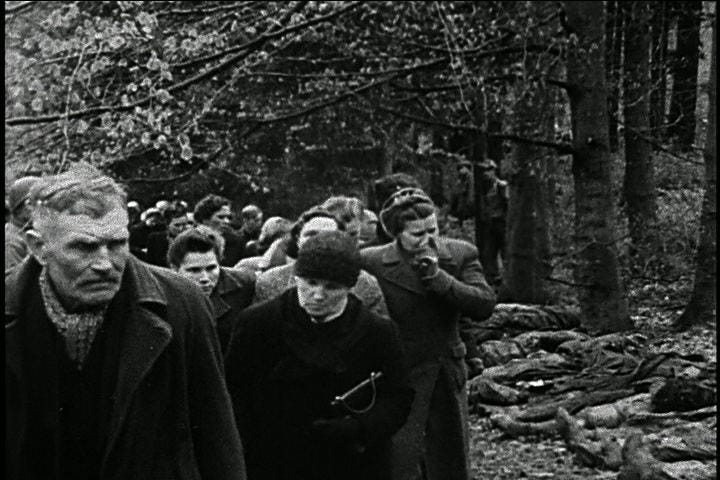
What Nazi propaganda could not achieve in all those years—to make clear to me what this war was really about—the democrats managed effortlessly after the war.
Translated Title: Conversation with the Reader
Original: Gespräch mit dem Leser
Attributed Author: Gerhard B.
“Der Weg” Issue: Volume 8, Issue 1 (Jan. 1954)
Page(s): 71-72 [Scan LINK]

GERHARD B.:
Conversation with the Reader
Nuremberg, Nov. 24, 1953.
We reproduce below a letter we received from Nuremberg, which—after discounting the pure bitterness in it—seems worthy of serious consideration. We will publish our response in the February issue as soon as Mr. B. has confirmed receipt. (Ed.)
Dear Editorial Staff!
What I am writing to you today has been accumulating in me for a long time. It will not be so pleasant that you will publish it. But perhaps it will give you an idea of what people think who do not call themselves patriots 365 times a year. I am writing it to you because you produce a magazine that, although it does not appeal to me in all things, is nevertheless one of the few that one can still read without throwing up.
I was not affected by the denazification because I once lost my right arm in the Baranow bridgehead and because otherwise I never played a role that would have made a purge worthwhile. I also had little sympathy for “golden pheasants,” whose type was also represented in the barracks. By the end of the war, I had had enough of the whole thing. But what Nazi propaganda could not achieve in all those years—to make clear to me what this war was really about—the democrats managed effortlessly after the war. In short, it took less than a year for me to experience the plundering by this treacherous band of robbers, and I became, as you so tritely say, a nationalist. I was furious to the gills.
I had a lot of friends who felt exactly the same way. None of us thought of restoring the Nazi party, but of course we wanted the rabble to leave, the exploitation to stop, and the German Reich not to be divided. In the discharge camp, we had seen groveling officers for the first time. Then outside, the legion of whores, the gassed but resurrected Jews who became rich while we starved. The strange dealings of the new politicians spread around, and we stood stunned before the confessions of the generals who had made us fight and die so that we would lose the war as soon as possible. We experienced the documentary film Death Mills (Die Todesmühlen) (which shook us a bit), and then it was withdrawn so quickly because its incinerators had only been built afterward and its piles of corpses came not from the concentration camps but from the burned German cities, and because that just could not be hidden in the long run.
Then we got our hands on small pamphlets about the tortures and extortions in the prisons. In individual meetings of the licensed parties, men suddenly stood up and said some small truth. And they received tremendous applause for it. Even the press began to admit some atrocities, so as not to lose all credibility. But that too was quickly muffled with the $ 15M USD subsidy. Our hearts gradually warmed. We thought, now only a few men with their hearts in the right place are missing, no great politicians, no elegant compromisers.
Well, we didn’t have to wait long. A legion came. Small and medium and mediocre, more dishonest than honest. But we didn’t know that back then. They talked, collected contributions, and went at it—against each other, without exception! Should I list them all here? It’s not worth it. We have experienced so many of them that we feel sick. They united and separated and gleefully threw mud at each other. They edited small leaflets in which they unloaded their complexes, traveled around, and let themselves be fed by the poor followers. Whoever talked with one of them for an hour knew that the whole national uprising consisted of traitors and agents, except for the conversation partner. In their circulars, they attacked the other nationals, former or defected sub-leaders, whom they retroactively excluded with abuse and disgrace. They all had their special patent for the rebirth, the great uprising, the great turning point, the great elevation, the inner and outer renewal. Only the patent on how to unite, none possessed that. They all fought with clenched strength—against each other.
Until Mr. Adenauer came and put them all on ice. Honestly, I can’t suppress the Schadenfreude. They got exactly what they deserved. Strictly speaking, we should be grateful to Adenauer for freeing us from these leaders and clearing the path they blocked. For their failure, they have a thousand arguments today, but they were known to them before as well. The arguments are even correct. The occupation powers are still in the country and support Adenauer. He has unlimited financial means for every kind of propaganda, the press, the radio, the police and criminal police, the office for the protection of the constitution. The clergy did not fail to provide its fire support. He did not even shrink from small sneaky tricks with the election law. That’s all correct. But suppose all these conditions had not existed—do you believe that the nationals would have fared better then? I don’t. Of course, they have no newspaper and no money. Why? Because they are not able to get something like that off the ground. For they can’t even do the simplest thing—be united. How would it look if they suddenly had to govern Germany!
As for me, I won’t participate anymore. Germany, Europe, the White race? Ask the national leaders that. Have they ever thought of that in their so-called “national struggle”? They lied about their great party that would build the new Reich—if only the contribution comes in punctually and they remain at the top. I have heard comrades say: “A Germany with these people? Then better none at all, like now.”
The stupidest thing you could do was to give people of this sort a place in your magazine and thereby make them known. The occupation servants have destroyed a lot and made a huge bill that is still open. But after all, we wanted to know who they were and for whom they did it. It was they who gave the impetus to inner resistance, not the national leaders who chopped up this good start. One simply cannot exploit the idealists unpunished up to the limit.
When you speak of pests on the Reich, do not forget these fellows.
An Austrian mountain infantry lieutenant, who once shortly after the war had helped me out of trouble in a nice way, said to me then: “The Reich will never be built by the parties again, but only by the few determined ones who do not ‘join in.’” That is going around in my head today. Please do not take it amiss that I have told you my opinion so drastically. It was necessary once—and now I feel lighter too. Greet Colonel Rudel from us. For him, we are still here.
"An Austrian mountain infantry lieutenant, who once shortly after the war had helped me out of trouble in a nice way, said to me then: “The Reich will never be built by the parties again, but only by the few determined ones who do not ‘join in.’”
-German Will Veteran's letter to the editor Jan. 1954 edition of Der Weg Newspaper
______________
Powerful stuff, and it rings so true to me today. The sad reality is that any organized resistance of any numbers is doomed. The more that are involved, means more exposure to dissolution. We are lucky to retain the love and respect of our own family. Try do that and maintaining some dignity, without joining The Gang. Parroting the lies, turning a blind eye, going along to get along, or learning to appreciate what little they do allow you.
I can't say that much for myself, I am estranged from all friends and family. I am unable to secure any thing close to reasonable employment either, as The Gang’s harassment and disrespect never stops on the job. In a world dominated by gangsters, all organizations are a rank-based exploitation hierarchy.